Bedding & Materials
Percale or Sateen? Choosing Organic Cotton Sheets by Feel and Climate
A sheet is a small landscape of loops and crossings. Change the way its cotton threads pass over one another, and the fabric can feel crisp and airy or smooth, substantial, and softly draped. Understanding that difference can make it easier to choose organic cotton sheets suited to your sleep temperature, preferred texture, and laundry habits.
At bedtime, the body notices details that can disappear in daylight: the cool touch of a pillowcase, a sheet’s gentle weight across the legs, the way fabric gathers or falls as you turn. Those sensations are shaped partly by fiber, but weave matters too. Percale and sateen are both made from cotton, yet their different thread structures create distinct surfaces and different impressions on the bed.
Percale is commonly associated with a crisp hand and an open, breathable feel. Sateen is known for a smoother surface and a more fluid drape, often with a little warmth and weight. Neither is universally better. The right choice depends on how you experience temperature, what feels comfortable against your skin, and how much attention you want to give routine care.
The word “organic” adds another useful part of the decision, but it does not tell you whether a sheet will feel cool or silky. It describes agricultural and processing standards verified through a certification system. To choose thoughtfully, consider the fiber and certification alongside the weave, construction, fit, finish, and care instructions.
First, what does a weave change?
Woven fabric is formed by interlacing lengthwise threads, called warp, with crosswise threads, called weft. The pattern of that interlacing affects the fabric’s surface, flexibility, and structure. A weave can also influence how a sheet hangs and how it feels when it touches the skin.
In a basic percale construction, threads pass over and under one another in a balanced pattern. This close, even structure creates the familiar matte surface and crisp hand. Percale sheets may feel a little firm or papery when new, then soften as they are laundered and used. That crispness is part of their appeal for people who enjoy a fresh, lightweight feel.
Sateen uses a different arrangement, with yarns passing over more threads before going beneath one. More of the yarn surface is exposed on one side, creating a smooth face and often a subtle sheen. That structure helps explain why sateen can feel silkier and drape more heavily than percale. It does not mean the sheet is made of satin: sateen is a cotton weave, while satin describes a related weave often made from other fibers.
These are broad tendencies, not guarantees. Yarn quality, fabric density, finishing, and the way a sheet is made all affect the final result. Two percale sets can differ in weight and crispness, just as two sateen sets can vary in softness or sheen. If possible, use descriptions of the specific fabric—and the maker’s material and care details—rather than relying on weave names alone.
Percale: crisp, airy, and easy to layer
For many sleepers, percale calls to mind a cool, clean surface: a sheet that feels light rather than enveloping. Its crisp texture can be appealing in warm weather or in a bedroom where the bedding needs to feel breathable. Because the fabric often holds a more structured shape, it may also feel less clingy than a smoother, more fluid sheet.
That impression can make percale a useful starting point for people who tend to feel warm at night. The sheet itself cannot control room temperature or guarantee a cooler night, but a breathable fabric may feel more comfortable than a heavier, closer-draping alternative. The mattress, duvet, sleepwear, humidity, and room ventilation all play a part. A change in sheets can be one piece of a broader approach to the sleep environment.
Percale also suits people who appreciate a simple, matte finish. Its texture tends to read as neat and understated rather than glossy. If you like the sensation of a freshly made bed and do not mind a little creasing, percale may match your preferences. It is often a good candidate for year-round use, especially when you adjust warmth with blankets or a duvet rather than choosing a single heavy layer.
Some percale fabrics can feel crisp or slightly stiff at first. Washing according to the care label and allowing the fabric to soften through regular use can change its hand. Avoiding excessive detergent and high heat may help preserve the cotton and keep the fabric comfortable over time. If you prefer a sheet that feels very smooth straight from the package, percale’s characteristic crispness may not be your first choice.
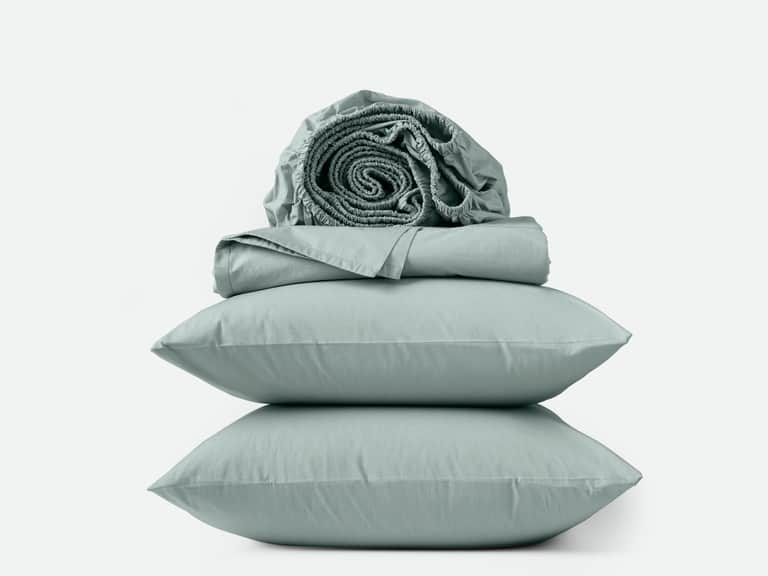
One example is the Refined Organic Percale Sheet Set, described as GOTS-certified organic cotton with a smooth, crisp feel and breathable construction. Its product details specify a seven-inch hem on the flat sheet and pillowcases, a plant-based softener finish, and cold, gentle machine washing. Those details offer more practical guidance than the word “percale” alone: they describe the feel, finishing, and everyday care to expect.
Sateen: smooth, weighty, and softly draped
Sateen often appeals to sleepers who want a smooth surface and a sheet that falls softly around the body. Its more fluid drape can give the bed a relaxed, substantial feel. A subtle sheen may also make the fabric look a little more polished, though the degree of shine varies from one construction and finish to another.
The same qualities that make sateen inviting can make it feel warmer or more enveloping than a crisp percale sheet. This may be welcome if you sleep cool, live in a colder climate, or enjoy bedding with a little more presence. In a warm room, a heavier-feeling sheet may be less appealing. Personal experience matters: people respond differently to the same fabric, and room conditions can shift with the season.
Sateen’s smoothness can be a reason to choose it for a bed that feels soft and settled rather than freshly pressed. Many sateen options are described as wrinkle-resistant, but that does not mean they never crease. How a fabric looks after laundering depends on its construction, how quickly it is removed from the dryer, and whether it is folded or placed on the bed promptly.
For people who like both weaves, using them in different seasons is a straightforward option. A crisp percale set can be comfortable through warmer months, while sateen may suit cooler evenings. A lighter duvet or blanket can also balance a more substantial sheet, and an additional coverlet can be removed when the room warms. Comfort is often less about finding a single perfect fabric than about building layers that can change with conditions.
A simple comparison by feel and use
| Consideration | Percale | Sateen |
|---|---|---|
| Typical hand feel | Crisp, smooth, and structured | Silky-smooth, soft, and fluid |
| Typical drape | Light and less clingy | More relaxed and substantial |
| Common temperature impression | Airy and often preferred by warm sleepers | Often feels warmer or more enveloping |
| Surface appearance | Usually matte | May have a subtle sheen |
| A good match if you like | Fresh, crisp bedding and a lighter feel | Softness, smoothness, and a weightier drape |
This is a guide to common characteristics, not a performance guarantee. Fiber length, yarn quality, finishing, and fabric weight all contribute to feel. Product descriptions may use terms such as “cool,” “warm,” “weighty,” or “wrinkle-resistant,” but those descriptions reflect a particular construction and may not match everyone’s experience.
Match sheets to your sleep climate
Climate begins in the room around you. A well-ventilated bedroom in a humid summer has different demands from a chilly room in winter, and the person sharing the bed may have different temperature preferences. Think about when you wake warm or cold, whether you use a heavy duvet, and whether your bedding feels comfortable after the room has been closed for the night.
If you frequently feel hot, begin with a breathable, lighter-feeling option such as percale. Consider pairing it with a duvet insert suited to your room rather than expecting the sheet to solve overheating on its own. Reduce unnecessary layers during warm spells, and follow the maker’s care instructions so detergent or fabric softener residue does not build up and change the fabric’s feel.
If you often feel cool, enjoy a softer surface, or want bedding with more drape, sateen may be a better place to start. You can still adjust the rest of the bed: a light blanket can provide extra warmth without committing to a thick duvet, while a breathable top layer can be removed when temperatures rise.
For a couple with different preferences, small adjustments can matter. Separate blankets, a lighter duvet, or different sleepwear may help each person tune their side of the bed. Alternatively, keep the fitted sheet in the weave both sleepers prefer and vary the upper layers. The goal is not to find a fabric that erases all differences, but to make the bed adaptable.
Climate also includes humidity. Cotton can absorb moisture, but no sheet removes the need for suitable room ventilation or changes the underlying conditions of a humid space. If bedding feels damp or clammy, consider the room’s airflow and the weight of the covers as well as the weave. Practical factors often work together more strongly than a single label or thread-count number.
What “organic cotton” tells you—and what it doesn’t
Organic cotton refers to cotton grown under a defined agricultural standard. The details depend on the certification program and the market in which the product is sold. Certification may set requirements for production and processing, while a product’s full material story can also include where its cotton was grown, where it was spun and woven, and how it was finished.
Look for a clearly named certification rather than relying only on broad phrases such as “natural,” “eco-friendly,” or “clean.” GOTS—the Global Organic Textile Standard—is one certification that applies to textiles and includes requirements beyond the fiber’s agricultural origin. A label’s presence does not mean every aspect of a product has the same environmental impact, so examine the certification’s scope and the manufacturer’s supporting information.
Organic certification does not determine whether cotton is woven as percale or sateen. It does not guarantee a particular softness, thread count, cooling effect, or absence of all possible allergens. It is one piece of information about how a textile is made. The practical choice still comes down to the particular fabric, its construction, your preferences, and how the item is maintained.
It can help to read a product description in layers: fiber content first, then certification, weave, finishing, country of origin, and care. A sheet described as 100% organic cotton may still feel different from another 100% cotton sheet because the yarns and weave are different. Likewise, “organic” alone does not explain whether a fabric is light, dense, brushed, crisp, or smooth.
Care is part of the decision
Sheets are among the bedding items that are washed regularly, so a comfortable fabric also needs to fit your household routine. Many organic cotton sheets are machine washable, but instructions differ by product. Some recommend cold water, a gentle cycle, low-heat drying, and prompt removal from the dryer. Always follow the care label supplied with the particular sheet.
Cold, gentle washing can help limit unnecessary wear and reduce the energy used to heat water. Use detergent in the amount recommended for your load; excess detergent may leave residue that dulls the fabric’s feel. Fabric softener is not automatically needed, particularly if a sheet already has a softening finish. If you choose to use one, check the manufacturer’s guidance, since coatings can affect absorbency and hand.
High heat may contribute to shrinkage or wear, so low-heat drying or line drying is often a gentler approach when the care instructions allow it. If you use a dryer, remove sheets promptly to reduce deep creases. Percale’s crisp, matte surface may show wrinkles differently from sateen’s smoother drape, but either can crease during washing and storage.
Wash new sheets before use if the care label permits and you prefer a freshly laundered feel. Over time, cotton may soften through repeated washing. Avoid harsh bleaching unless the maker specifically approves it, and wash similar colors together to reduce the risk of color transfer. These small habits can keep sheets comfortable without making care complicated.
Fit, finish, and the details beneath the weave name
A sheet can have the right texture and still frustrate you if it does not fit the mattress. Measure the mattress depth, including any topper, and compare it with the fitted sheet’s pocket depth. Elastic placement and the strength of the corners affect how securely the sheet stays in place. A pocket depth of 15 inches, for example, may suit many mattresses, but the actual fit depends on mattress thickness and the design of the sheet.
Check what a set includes. A “sheet set” commonly contains a fitted sheet, a flat sheet, and pillowcases, but the number and size of pillowcases can vary with bed size. If you only need a replacement fitted sheet, purchasing one separately may be more practical than replacing a full set. Clear descriptions should state the included pieces and relevant dimensions.
Finishing details also matter. A plant-based softener or a named bio-based finish may be used to alter the fabric’s hand, while embroidery, printed designs, or wide hems change the look and construction. These details are distinct from the weave itself. If a particular finish is important to you, look for it in the product specifications rather than assuming every sheet in a weave category has the same treatment.
Thread count is another number that can attract attention, but it is not a complete measure of quality or comfort. It does not tell you the fiber’s origin, certification, yarn quality, finishing process, or how the fabric will feel to you. A useful description combines clear material information with weave, construction, care, and fit details—enough context to make the number only one part of the picture.
A practical way to choose
Rather than beginning with a claim of luxury or a single specification, begin with the sensation you want at bedtime. Ask yourself whether you prefer a crisp sheet that feels light and fresh or a smooth sheet that settles into a softer drape. Then consider the room and your habits: Do you sleep warm? Do you prefer a more substantial cover? Are you willing to iron, or do you want bedding that can be washed and returned to the bed with minimal fuss?
- Choose percale as a starting point if you like a crisp, breathable feel, prefer a matte finish, or often find heavy bedding uncomfortable.
- Consider sateen if you value a smooth surface, a soft drape, and a more substantial feel, or if you tend to feel cool at night.
- Check the fabric details for fiber content, named certification, finish, origin, and care instructions.
- Check the dimensions for mattress pocket depth and the exact pieces included in a set.
- Think in layers if your room or temperature preferences change across seasons.
If you can handle fabric in person, notice how it feels in your hand and whether it seems light or dense. If you are shopping from a description, look for precise information instead of relying on a single adjective. Words such as “crisp,” “smooth,” and “weighty” can be useful clues when they are supported by details about the weave and construction.
Comfort is a pattern of small choices
Choosing between percale and sateen is less like selecting a universal standard than reading the conditions of your own sleep. The weave shapes the surface: percale tends toward crispness and an airy impression, while sateen tends toward smoothness and drape. The room, the duvet, the mattress, and personal temperature preferences complete the picture.
Organic cotton adds information about the material’s production, especially when a specific certification is identified, but it does not settle the question of feel. For that, turn to the weave and the product’s construction. For day-to-day satisfaction, check fit and care. Taken together, these details make a more useful guide than a label or number in isolation.
When the bedroom is quiet and the day has ended, the difference is not abstract. It is the crisp lift of percale beneath a warm-season duvet, or the soft fall of sateen across the bed on a cool evening. The best sheets are the ones that suit the climate you sleep in and the texture you want to return to, night after night.